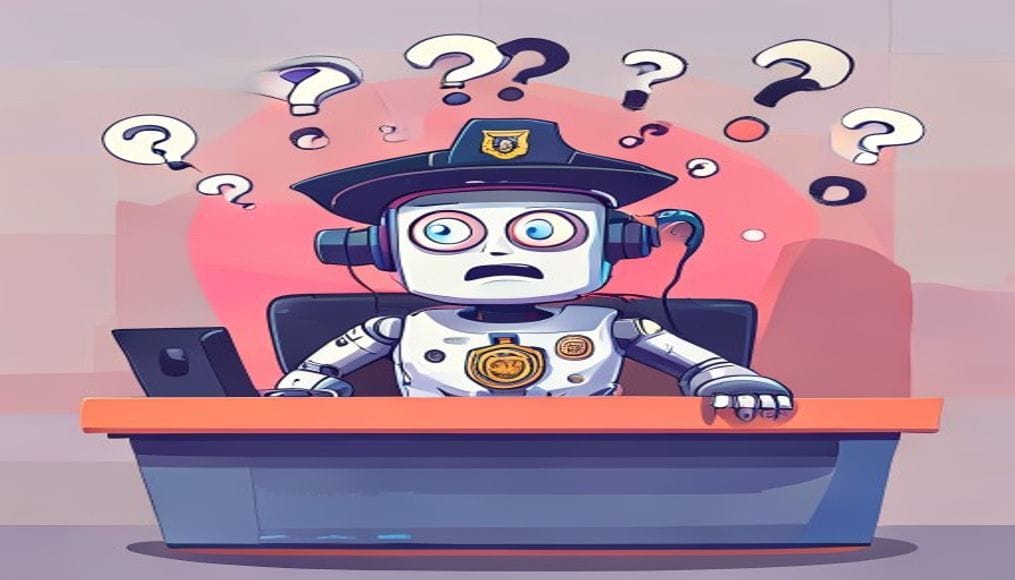
AI is increasingly used to automate tasks within contact centers, but this "AI deputy" model introduces novel risks. We're seeing unintended consequences when AI agents misunderstand context, misinterpret customer intent, or simply hallucinate responses.
The Promise of AI in Contact Centers
The promise of AI within CCaaS is substantial: reduced operational costs, improved agent productivity, and enhanced customer experiences through personalized interactions. AI-powered virtual assistants automate routine inquiries, freeing up human agents to handle more complex issues. Natural Language Understanding (NLU) is used to route calls, summarize interactions, and provide real-time guidance to agents.
AI is also being deployed to detect fraud, predict customer churn, and personalize marketing campaigns. Call centers have mountains of recorded voice data which can be transcribed and analyzed. This data can be used to train AI systems to recognize patterns and predict customer behavior.
However, the deployment of AI in contact centers is not without its challenges. One of the biggest is ensuring that AI systems are accurate and reliable.
The "Confused AI Deputy" Problem
The "Confused AI Deputy" refers to an AI system that acts on incomplete or inaccurate information, leading to errors or unintended consequences. These systems might misinterpret dialects, slang, or novel phrasing, leading to incorrect routing or inappropriate responses. Think of an AI summarization tool omitting key negative sentiment that would have otherwise escalated a case.
These failures often stem from limitations in training data, model bias, or a lack of contextual awareness. Fine-tuning Large Language Models (LLMs) with biased or incomplete datasets can amplify existing prejudices or lead to skewed outcomes. Reinforcement Learning from Human Feedback (RLHF) is still vulnerable to exploitation. An attacker can craft targeted prompts that cause the AI to generate harmful or misleading content.
Real-World Examples of AI Mishaps
We've seen examples of AI-powered chatbots providing inaccurate financial advice, leading to customer frustration and potential legal liability. In healthcare, misinterpreting symptoms could result in incorrect diagnoses or treatment recommendations. Even seemingly innocuous errors, like misrouting a call to the wrong department, can damage customer satisfaction and erode trust.
Consider an AI-powered virtual assistant designed to handle appointment scheduling. If the AI fails to recognize a cancellation request due to a user's unusual phrasing, the appointment remains on the books, wasting both the customer's and the provider's time. Or imagine an AI sentiment analysis tool misinterpreting sarcasm as genuine positive feedback, leading to a flawed understanding of customer satisfaction levels. These examples can undermine the benefits and raise operational costs.
Security and Compliance Nightmares
The rise of the confused AI deputy also poses serious security and compliance risks. If an AI system is vulnerable to prompt injection attacks, malicious actors could manipulate it to disclose sensitive customer data or perform unauthorized actions. For example, and attacker might use carefully crafted prompts to cause an AI agent to reveal Personally Identifiable Information (PII).
An AI system that mishandles or improperly discloses sensitive information could result in hefty fines and reputational damage. Secure models, robust access controls, and comprehensive logging are essential to mitigate these risks. Model drift must be monitored, and models should be regularly retrained and audited.
Mitigating the Risks
There are several steps organizations can take to mitigate the risks associated with the confused AI deputy. First, invest in high-quality, diverse training data that accurately reflects the range of customer interactions your AI system will encounter. Data quality is paramount.
Second, implement robust monitoring and testing procedures to identify and address errors or biases in AI performance. This includes regular audits of AI outputs, as well as ongoing monitoring of key performance indicators (KPIs).
Third, establish clear guidelines and protocols for human oversight of AI systems, especially in high-stakes situations. Implement a "human-in-the-loop" approach where human agents review and validate AI-generated responses or decisions. Finally, prioritize security and compliance by implementing appropriate security measures and adhering to relevant regulations. AI Red Teaming is a useful practice.
The Path Forward
The "AI deputy" concept has great potential, but we must address the risks of inaccurate, biased, or vulnerable systems. By prioritizing data quality, implementing robust monitoring and testing procedures, and maintaining human oversight, organizations can harness the power of AI while mitigating the risks of the confused AI deputy.
Next steps: * Review your contact center AI deployments. * Engage security to conduct a threat model and risk assessment. * Establish clear guidelines for prompt engineering, data quality, and human oversight.
Member discussion: